early autumn, before the Narnian journey
Jill’s Isolation
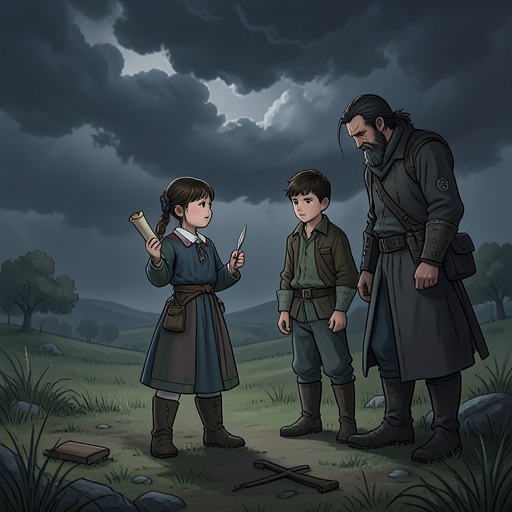
At the experimental school, after being bullied, Jill Bor hid behind the gym and cried. The school's permissive management allowed a group of powerful students to torment others freely, while adults regarded the bullies as an interesting case and did not stop them
shortly after Jill’s quarrel with Eustace
Eustace’s Confession
Eustace told Jill that during the last vacation, he had gone to a world where animals could speak and magic really existed. He admitted that experience changed him, and Jill promised to believe him and keep the secret
immediately after their appeal to Aslan
The Open Door
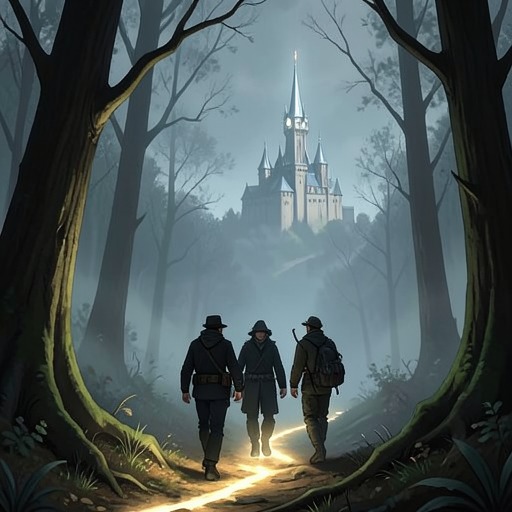
to avoid a student coming to find jill, the children wove through the bushes and ran toward a door on the school wall, a door that is usually locked. this time, the door handle turned; outside was a scene of sunny daylight, completely different from the bleak autumn school they had expected
their first moments in the new world
The Cliffside Fall
children walked through a vast and quiet forest until they reached a fearsome cliff. gill wanted to prove she was not afraid of heights, so she walked too close to the edge; when panic finally overtook her, she lost control
soon after Eustace’s fall
Jill Meets Aslan
Gill was alone and very thirsty. She followed the sound of running water to a stream, where she saw a lion waiting. The lion told her she could drink, but did not guarantee her safety; although afraid, she had to approach him
during Jill’s meeting with Aslan
The Four Signs
[Aslan](entity:character-recall-character-aslan-f00e3dfd5571) orders Jill to search for the missing Prince Reinald — the son of the old King Caspian — and bring him home; even if it means dying or having to return to her own world, she must complete the mission. He gives her four signs: when Eustace arrives
later that day
Jill’s Journey to Narnia
[Aslan](entity:character-recall-character-aslan-f00e3dfd5571) used his breath to carry Jill across the sky and sea. At first, the flight was silent and peaceful; as she gradually descended, the clouds, waves, land, and the sounds and smells of the surrounding world all gathered around her
the children’s arrival in Narnia
Caspian’s Final Voyage
In the capital of Kelpa Ravir, the aged King [Caspian X](entity:character-recall-character-caspian-x-dd653496fa6d) prepares to set sail east again, hoping to meet [Aslan](entity:character-recall-character-aslan-f00e3dfd5571) and ask who will succeed him as king. His subjects mourn his departure, and Tarnhelm remains as regent. Eustace recognizes Caspian
the evening of Caspian’s departure
The First Sign Missed
Gill told Eustace that [Aslan](entity:character-recall-character-aslan-f00e3dfd5571) had said that the first person he would meet in [Narnia](entity:location-recall-location-2ceeeca00777) would be an old friend, and that he must immediately greet this friend. Eustace recognized Caspian, but because he was immersed in the royal farewell and unsure whether he really was
that night at Cair Paravel
The Owls’ Escape Plan
That night, Grinfeith visited [Jill and Eustace](entity:relation-recall-relation-401423c59319), urging them to leave the castle secretly. The king was not there, and even if Trungkin learned that the children had been sent by [Aslan](entity:character-recall-character-aslan-f00e3dfd5571), he would issue an order to prohibit further searches for Rehoboam
about ten years before the children arrive in Narnia
Rilian’s Disappearance
The owls told of this tale: Queen Rila's mother was killed by a green snake at a fountain in the northern forest. Rila chased the snake, but was then drawn to a beautiful green-clad woman who appeared at the same place, and gazed at her for a long time
the morning after the owls’ parliament
The Northward Quest Begins
The owls explained that [Trumpkin](entity:character-recall-character-trumpkin-84373abf1fd2) would not approve another search, as previous expeditions had already caused many brave people to be lost in [Narnia](entity:location-recall-location-2ceeeca00777). They directed [Jill and Eustace](entity:relation-recall-relation-401423c59319) to find [Puddleglum](entity:character-recall-character-puddleglum-f09a249d5ebd) — a creature familiar with the marshes of the northern regions. Although P
the first days of the northward journey
Across Ettinsmoor
The travelers crossed the River Rivel, climbed the Eddystone Waste, and left the inhabited areas of [Narnia](entity:location-recall-location-2ceeeca00777). They passed through a gorge alongside a group of giants who were throwing stones at a stone burial mound; then they fought fiercely, injuring each other, and finally cried
after many days on Ettinsmoor
The Ancient Bridge
At the northern edge of the wasteland, the travelers came to a deep ravine and found a huge and ancient stone bridge. Pudglen did not trust the bridge, but Jill recognized it as possibly the ancient giant civilization ruins they were seeking on this journey. They crossed the open arch bridge
at the far end of the ancient bridge
The Lady’s Invitation
The lady in green called the giants of the Haversham the masters of civilization, and said they might know the way to the ruined city. She told the children to tell the giants that she had sent them as guests to attend the autumn feast, and reminded them that the city gates would close early
during the approach to Harfang
The Signs Forgotten
The travelers struggled forward in the severe cold, their minds increasingly focused on the comfortable life waiting for them in the north. Jill no longer repeatedly recited the omens of [Aslan](entity:character-recall-character-aslan-f00e3dfd5571), and the missing prince gradually faded from the children's thoughts
the morning after the travelers reach Harfang
The Meaning of “UNDER ME”
From the castle, Gill saw that the mountain they passed was a vast ruins. The ditches outlined the walls of the ancient buildings, "Under me" written across the stone pavement; the travelers actually crossed a letter, but mistook it for a road. Gill remembered the scene when [Aslan](entity:character-recall-character-aslan-f00e3dfd5571) showed
the morning after the revelation
A Plan to Escape Harfang
The children and [Puddleglum](entity:character-recall-character-puddleglum-f09a249d5ebd) realized that the giants might not let them go freely, so they decided to pretend to be happy guests and at the same time look for a way to escape. Jill acted innocent and persuaded the giants to let them look around the castle
later that day in Harfang
The Autumn Feast’s Secret
At lunch, Pudglen heard the giants talking about a talking male deer that had pleaded with them not to kill it. The travelers realized that the food before them contained a talking animal; this discovery made the giants' polite hospitality take on a threatening tone
that afternoon
The Flight from Harfang
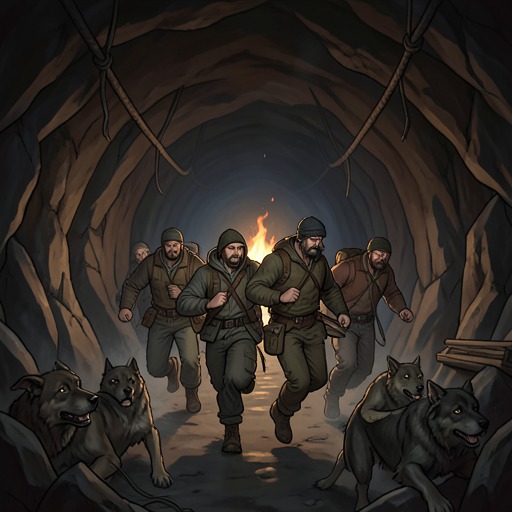
The travelers slipped out of the kitchen utility room door, but the open area between the castle and the ruins left them exposed. The returning hunting party discovered them, and the giants shouted, releasing dogs to chase them
after the fall beneath the ruined city
Captured by the Earthmen
Three travelers were wounded and disoriented, hearing a voice questioning why they had come to the underground kingdom. Cold light revealed one hundred fully armed underground people, who said they would take these strangers to meet the queen of the underground kingdom
after the march through the caverns
The Sunless Sea
The underground people rowed the travelers across the dark sea without sun. Without sunlight or landmarks, the children began to think that the surface world might have been just a dream; Pudglen reminded them that they were moving in the direction of the giant ruins below
upon arrival at the underground castle
The Black Knight’s Story
A tall, handsome young man in black recognized the travelers as the people he met on the bridge. Jill exclaimed that they were looking for Reuel, but the man denied the name and claimed he knew nothing about [Narnia](entity:location-recall-location-2ceeeca00777). He told them that the inscription "Under me" was just a fragment
that evening, before the nightly enchantment
The Knight Is Bound
The knight announced that he was about to enter a dangerous moment, and asked the travelers to leave; but they decided perhaps they could find useful clues, so they returned to check. They found him tied to a silver chair, looking in pain, and also knew that he would soon lose control. Before
during the Knight’s nightly crisis
The Fourth Sign
The knight struggled on the silver chair, pleading with everyone to release him and claiming that the queen's account of his condition was a lie. When he mentioned the name of [Aslan](entity:character-recall-character-aslan-f00e3dfd5571), the travelers recognized the last sign: the missing prince would be the first person they met who asked them to act in
immediately after the silver chair is cut apart
Rilian Reveals Himself
After his release, the knight picked up his sword and broke the silver chair, destroying the instruments of his torture. His mind cleared, he identified himself as [Rilian](entity:character-recall-character-rilian-55a8f5aa7e07), son of King [Caspian X](entity:character-recall-character-caspian-x-dd653496fa6d), missing for over ten years
moments after Rilian’s release
Rilian Rejects the Invasion
When the lady in green returned, she found that [Rilian](entity:character-recall-character-rilian-55a8f5aa7e07) had escaped, and the silver chair was destroyed. He refused her plan face to face: to have him lead an army to seize a land of innocent people, and then become a tyrant there
during the Queen’s attempt to ensnare the travelers
The Witch Denies Narnia
Under the witch's music and incense, the travelers struggled to recall [Narnia](entity:location-recall-location-2ceeeca00777) and the surface world. She insisted that Narnia did not exist, the surface world did not exist, and the sun did not exist; she said the travelers' memories were just children's fantasies, that they
at the height of the Witch’s enchantment
Puddleglum’s Defiance
The witch continued to mock [Aslan](entity:character-recall-character-aslan-f00e3dfd5571) as a mere fictional creature, but [Puddleglum](entity:character-recall-character-puddleglum-f09a249d5ebd) walked to the fire, stamped out the flames, and willingly endured the pain to dispel the sweet, sticky smoke. The intense pain brought him back to clarity; his resistance also gave others the chance to
immediately after Puddleglum’s defiance
The Witch’s Serpent Form
The green-clad lady cast down her instrument, transforming into a huge green snake, coiling around Rylein, attempting to suppress his sword arm. This form confirmed that she was the very snake that had killed his mother and had pursued him in the northern forest. Rylein, Pud
immediately after the Witch’s death
Underland Begins to Collapse
The Witch’s death breaks the magic sustaining her kingdom. The silent [Underland](entity:location-recall-location-underland-0ae5be63779d) erupts into noise and movement as a red glow appears, ships are swept through the city by rising water, and the Earthmen scatter through the streets.
[Rilian](entity:character-recall-character-rilian-55a8f5aa7e07) recognizes that the realm is coming apart and leads the others toward the stables. He refuses the enchanted armor that had made his captivity feel like a movable dungeon, taking only a shield that now bears the image of [Aslan](entity:character-recall-character-aslan-f00e3dfd5571).
during the collapse of Underland
Flight Through the Flooded City
The travelers escape the castle on two horses as water rises through the streets and Earthmen try to surround them. [Rilian](entity:character-recall-character-rilian-55a8f5aa7e07) leads them toward the red glow and higher ground, while [Puddleglum](entity:character-recall-character-puddleglum-f09a249d5ebd) and the children hold off threats along the way.
They capture [Golg](entity:character-recall-character-golg-44809c17e17e), who explains that the Witch had summoned the gnomes from [Bism](entity:location-recall-location-bism-e799a1550085) and enchanted them into gloomy, obedient laborers. When her death breaks the spell, the gnomes remember their home and rush toward the opening to the deeper land.
as the travelers reach the chasm
The Gnomes Return to Bism
At the chasm, [Golg](entity:character-recall-character-golg-44809c17e17e) invites [Rilian](entity:character-recall-character-rilian-55a8f5aa7e07) and the others to descend into [Bism](entity:location-recall-location-bism-e799a1550085), where gems grow alive and salamanders speak from the fire. Rilian is tempted by the chance to explore a land no surface dweller may have seen, and Eustace recalls the adventurous spirit of [Reepicheep](entity:character-recall-character-reepicheep-b6209eb55fe1).
Jill and [Puddleglum](entity:character-recall-character-puddleglum-f09a249d5ebd) insist they must return to the surface, and the closing chasm soon makes the choice unavoidable. Golg and the other freed gnomes plunge toward their home as the rift seals, leaving the travelers to follow the lamps toward the invasion tunnel.
after the chasm closes
The Darkened Escape Route
The travelers ride along the lamps marking the route toward the surface, crossing a valley where the floodwater is already rushing through. Behind them, the lights of [Underland](entity:location-recall-location-underland-0ae5be63779d) disappear one by one as the water spreads over the low ground.
The lamps eventually go out, leaving the party in darkness beneath the narrowing roof. Guided only by the faint patch of light ahead, they find a blocked passage and send Jill upward to investigate.
the night the party reaches the surface
The Great Snow Dance
Jill climbs through the opening and discovers moonlight, snow, and a dance of [Fauns](entity:creature-recall-creature-fauns-3412b573d05a) and [Dryads](entity:creature-recall-creature-dryads-72222009190e) in the woods. A snowball briefly stops her from calling down to the others, but she quickly alerts the Narnians that her companions are trapped beneath the hillside.
Eustace climbs after her, initially mistaking the welcoming crowd for enemies, then recognizes that they are friends. [Dwarfs](entity:creature-recall-creature-c29ad544cef4) and Moles dig through the hillside while the dancers gather around the opening, turning the travelers’ escape into a festive reunion with [Narnia](entity:location-recall-location-2ceeeca00777).
later that night
Rilian Returns to Narnia
The rescuers free [Puddleglum](entity:character-recall-character-puddleglum-f09a249d5ebd), the horses, and finally [Rilian](entity:character-recall-character-rilian-55a8f5aa7e07). Narnian creatures who remember the prince recognize him at once, and the crowd’s delighted welcome confirms that his identity and rightful place in the kingdom have not been forgotten.
The travelers are given food and shelter while the prince’s return is announced. The story of the Witch’s scheme becomes clear: she had killed Rilian’s mother, enslaved him, and intended to use him as the figurehead of an invasion against his own country.
the next morning
Caspian’s Return
[Jill and Eustace](entity:relation-recall-relation-401423c59319) learn that Caspian has turned back from his voyage after encountering [Aslan](entity:character-recall-character-aslan-f00e3dfd5571) and is expected at [Cair Paravel](entity:location-recall-location-cair-paravel-048f6e9db882). [Rilian](entity:character-recall-character-rilian-55a8f5aa7e07) rides ahead to meet his father, while the children travel with [Centaurs](entity:creature-recall-creature-centaurs-ceb963c0f431).
The reunion they hoped for is brief. Caspian arrives on a bed, gravely ill, and dies soon after greeting his son and blessing him. The return of Rilian restores the succession, but it cannot restore the years father and son lost or spare them grief.
immediately after Caspian’s death
Aslan Brings the Children Home
[Aslan](entity:character-recall-character-aslan-f00e3dfd5571) appears to [Jill and Eustace](entity:relation-recall-relation-401423c59319) as they grieve. He tells Jill not to dwell on her failures, affirming that they have completed the work for which he sent them, and agrees to take them home.
With a breath, he carries the children from the Narnian scene to the [Mountain of Aslan](entity:location-recall-location-mountain-of-aslan-e1f8c78f6bf4), where they find Caspian’s body beside a stream. The journey makes their return home inseparable from a direct encounter with death and the larger country beyond [Narnia](entity:location-recall-location-2ceeeca00777).
on the Mountain of Aslan
Caspian Restored
[Aslan](entity:character-recall-character-aslan-f00e3dfd5571) asks Eustace to take a sharp thorn and drive it into the Lion’s paw. The blood falls into the stream beside Caspian, whose aged body changes and rises young again.
Caspian embraces Aslan and speaks with Eustace, delighted to learn that his former companion reached the end of the world. His restoration reveals that death in [Narnia](entity:location-recall-location-2ceeeca00777) is not the final limit of life in Aslan’s country, though Caspian cannot return to rule Narnia as he once did.
the same brief interval in the human world
The Bullies Confronted
[Aslan](entity:character-recall-character-aslan-f00e3dfd5571) grants Caspian a glimpse of [Jill and Eustace](entity:relation-recall-relation-401423c59319)’s world and leads the children back to [Experiment House](entity:location-recall-location-experiment-house-f4f007ffb6c0). He breaks a section of the school wall with his roar, while the children, strengthened by his presence, face the pupils who have bullied them.
The bullies flee, and the Head’s alarm brings the school’s hidden problems into public view. An inquiry exposes the abuse and leads to expulsions; the school’s leadership is displaced, and conditions at Experiment House improve.
the years following the children’s return
The Quest’s Aftermath
[Jill and Eustace](entity:relation-recall-relation-401423c59319) remain friends, while the school becomes a better place after its bullying culture is exposed. Caspian returns to his own country, and [Rilian](entity:character-recall-character-rilian-55a8f5aa7e07) rules [Narnia](entity:location-recall-location-2ceeeca00777) well after burying his father.
[Puddleglum](entity:character-recall-character-puddleglum-f09a249d5ebd)’s burned foot heals, and the opening into the hillside remains accessible. Narnians later sail across the cool underground sea and tell stories of the cities below, preserving the strange world through which the quest passed.